Direct answer: Do not throw away your mattress and do not spray a household aerosol. Strip and hot-wash all bedding, vacuum the mattress seams, keep the furniture where it is, and book a professional inspection. Panic spraying pushes bed bugs deeper into walls and adjoining rooms.
Bed bugs — known as khatmal (खटमल) in Hindi and dhekun (ढेकूण) in Marathi — are one of the few household pests where the wrong first reaction makes the problem measurably harder to solve. Most people reach for a can of insecticide within the first hour of spotting one. That single step is the reason many infestations take three or four rounds of treatment instead of one properly planned course.
This guide covers what to do in the first few hours, how to prepare before a technician arrives, what actually happens during treatment, and what care matters afterwards. It is written from the work A Sai Pest Control has done across Thane, Mumbai and Navi Mumbai since 2001.
The first hour: four things to do, and two not to do
What you do before anyone inspects the room affects how well the treatment works. The aim in the first hour is to contain the problem without disturbing it.
- Strip the bedding into a sealed bag. Sheets, pillow covers, mattress protectors and nearby curtains go straight into a plastic bag that you close before carrying it out of the room. Carrying loose bedding through the house spreads bugs into rooms that were clean.
- Wash hot, or dry in strong sun. Water above 60°C, or several hours of direct sunlight with the fabric turned over. Room-temperature washing does not reliably deal with eggs.
- Vacuum the mattress seams and bed frame. Run the nozzle slowly along the piping, corners and screw holes. Empty the vacuum bag into a sealed plastic bag immediately and dispose of it outside the house.
- Photograph what you found. A clear photo of the insect, or of the dark spots on the sheet, helps confirm the identification before anyone visits.
And two things to avoid:
- Do not spray an over-the-counter aerosol. It kills a few visible adults and scatters the rest into wall cracks, skirting boards and the flat next door. The eggs are untouched. This is the single most common reason an infestation appears to come back worse.
- Do not move the bed or mattress to another room. A great many infestations spread from one bedroom to the whole house exactly this way. Sleeping in the hall does not escape the problem; it relocates it.
How to prepare before the technician arrives
Preparation is not a formality. It decides how much of the infestation the technician can physically reach, and it is the difference between a thorough visit and a partial one.
- Move furniture away from the walls. Beds and wardrobes pulled out one to two feet, so skirting boards, wall joints and the back of the headboard can be inspected and treated.
- Clear the clutter around the sleeping area. Boxes, bags and stacked items under the bed are hiding places, and they block access. Empty them out rather than shifting them to another room.
- Cover food, utensils and children’s toys. Store them in closed cabinets or take them out of the rooms being treated.
- Tell us who lives in the home. Infants, elderly family members, anyone bedridden, anyone with a respiratory condition, and pets — including aquariums, which need to be covered and their pumps switched off.
- Mention anything that arrived recently. Second-hand furniture, a delivery, luggage from travel, laundry sent out. Knowing the likely entry route changes where the inspection starts.
Steam, spray, or both? An honest comparison
There is a lot of marketing that presents steam and chemical treatment as rivals. In practice each one covers a gap the other cannot, which is why serious bed bug work uses both.
| Approach | Reaches eggs inside fabric | Reaches wall cracks and conduits | Leaves residual protection |
|---|---|---|---|
| Residual spray only | Poor — the eggshell resists most formulations | Good | Yes |
| Thermal steam only | Strong — sustained heat breaks eggs down on contact | Poor — the nozzle cannot enter a wall cavity | No |
| Steam plus residual spray (our method) | Strong | Good | Yes |
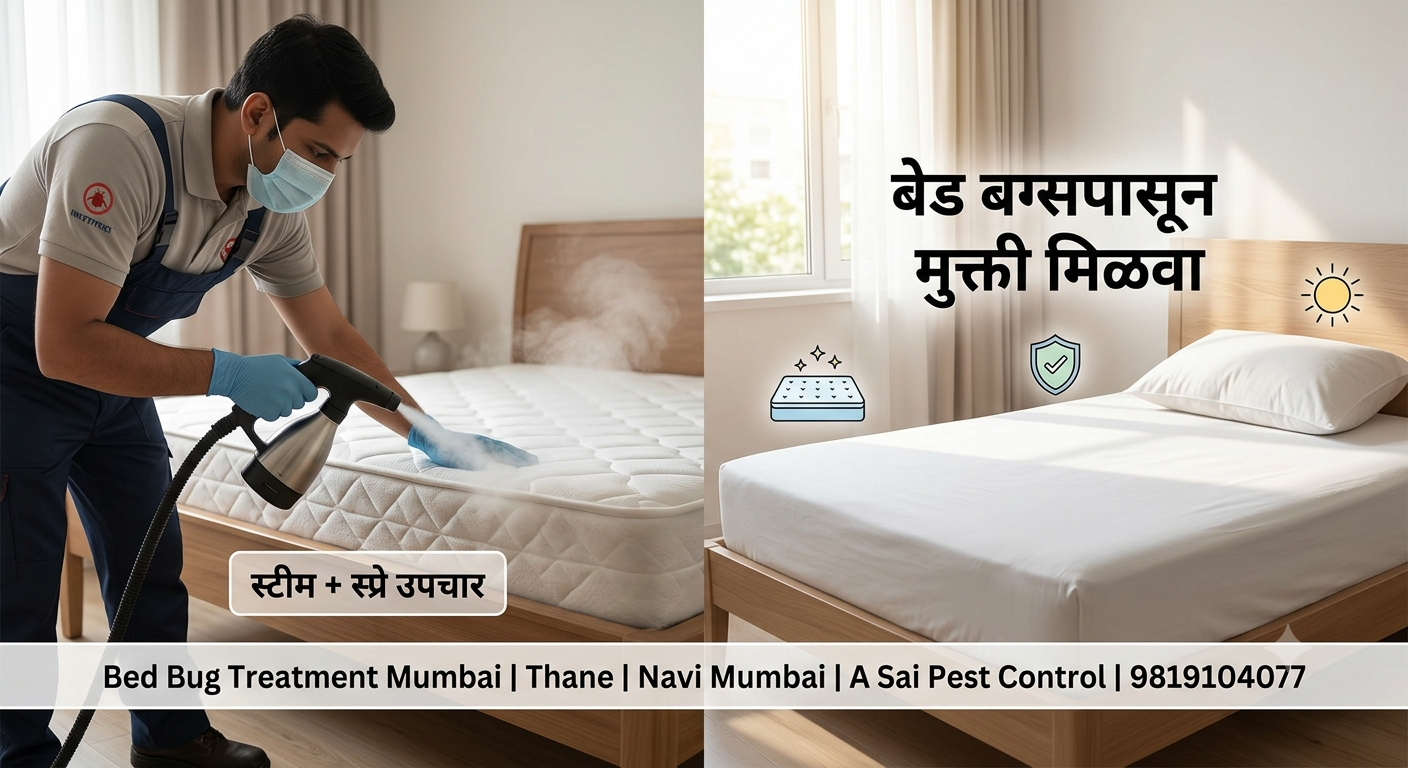
Steam is applied where the bugs and eggs actually sit — mattress piping, sofa folds, bed frame joints, headboards. The CIB-approved low-odour residual spray then goes into the cracks, skirting and conduits that steam physically cannot enter, where bugs shelter between feeds. Either method used alone leaves one half of the problem intact.
Not sure it is even a bed bug? Bed bugs are regularly confused with cockroach nymphs, carpet beetles and ticks, and the treatment for each is completely different. Send us a clear photo on WhatsApp and we will tell you what it is — free, with no obligation to book.
What happens during the treatment visit
A standard residential visit takes roughly 1.5 to 2.5 hours, depending on furniture layout and how far the infestation has spread. It runs in a fixed order.
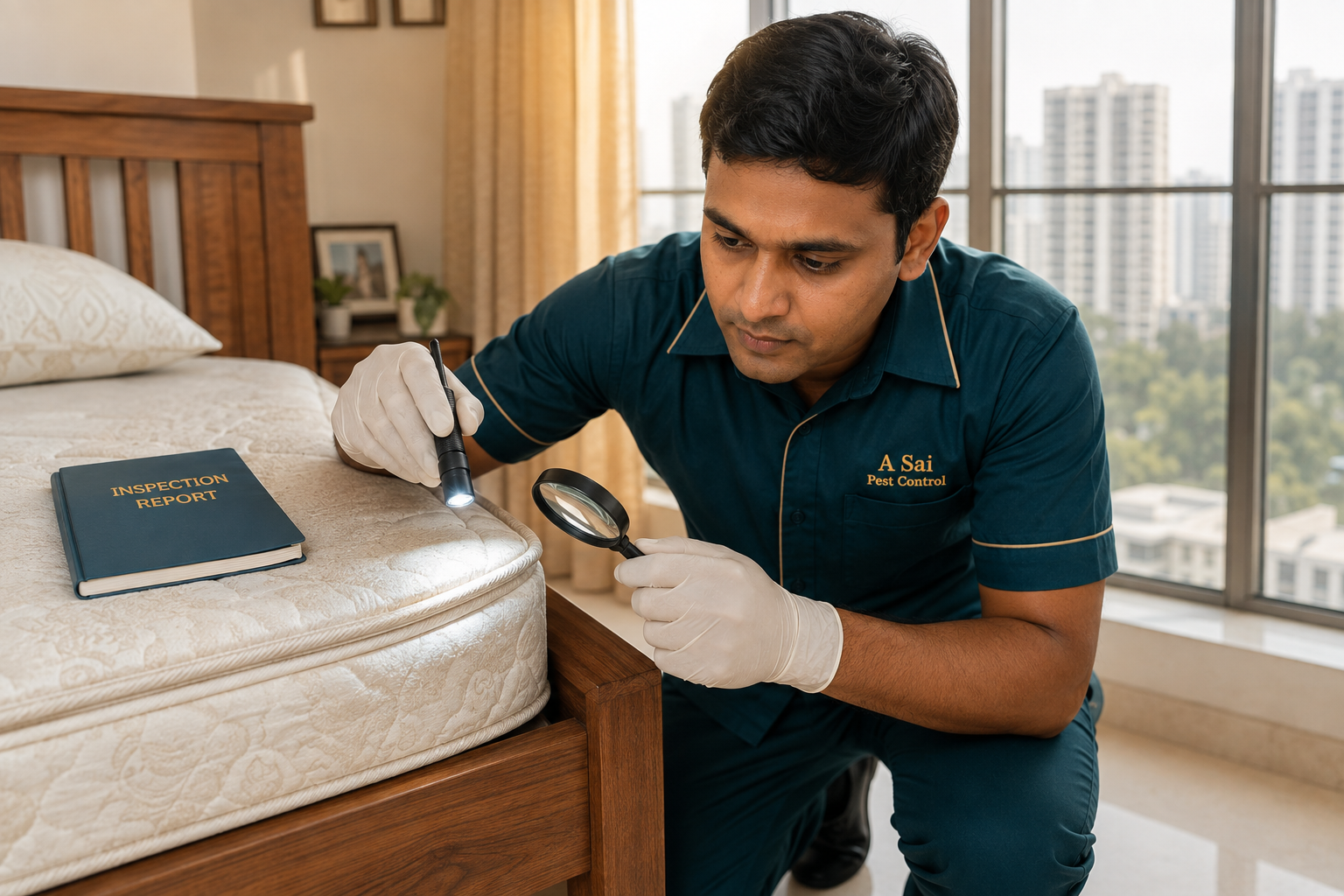
- Inspection. Mattress seams, bed frames, headboards, sofa joints, curtains, wardrobe corners and switchboards, to establish where the bugs are living rather than where they were seen.
- Steam. Worked slowly along seams and joints. Speed is the enemy here — the heat needs contact time to reach inside the fabric.
- Residual spray. Targeted into cracks, crevices, furniture joints and skirting, at the dosage appropriate to the infestation level found during inspection. Under-dosing leaves survivors; over-dosing exposes the household for no added benefit.
- Written aftercare. Preparation, re-entry timing and follow-up date, handed over before the technician leaves.
What to do after treatment
- Stay out of treated rooms for 2 to 4 hours, until surfaces are dry. Occupants and pets both.
- Ventilate before returning. Open windows and doors for twenty to thirty minutes.
- Do not wet-mop treated skirting boards or corners for 48 hours. Wiping them removes the residual barrier that is doing the work between the two visits.
- Use a clean zippered mattress protector once the sleeping surface has fully aired out.
- Keep sleeping in the same room. This surprises people, but moving to the hall spreads the problem and slows down the treatment.
Why the follow-up visit at 15 days matters
Bed bug eggs that sit deep inside a joint or a wall cavity can survive the first round. They hatch over the following one to two weeks. A visit at around day 15 catches those nymphs before they mature and start laying, which is what breaks the breeding cycle.
This is why a single visit, however thorough, is rarely the whole job — and why the follow-up is included in our residential price rather than charged separately. A treatment plan that stops at one visit is not cheaper; it is incomplete.
What if you still see activity after the follow-up?
Call us. It happens, and it usually points to one of three things: an untreated source elsewhere in the building, a preparation step that could not be completed, or a route of re-entry that has not been closed. In housing societies with shared walls, bed bugs move between adjoining flats through service ducts and wall gaps — treating one flat while the neighbouring flat stays untreated is one of the most common reasons a problem returns. We will come back, reassess, and tell you honestly which of these it is.
Situations that need a different plan
- PG accommodation and hostels. Occupants and belongings change constantly. These need several beds handled together, not one room at a time.
- Hotels, lodges and guest houses. A bed bug complaint in a public review is a commercial problem as much as a pest problem. Work is scheduled discreetly, room by room, around occupancy.
- Rooms with someone bedridden. The mattress is rarely lifted and the bed rarely moved, so infestations settle faster and get noticed later. Tell us beforehand so the sequencing and re-entry timing can be planned around that person.
- Old chawls and low-rise buildings. Timber fittings and shared walls create many hiding points. These jobs need patient inspection rather than speed.
A note on bites
Bed bug bites are often described as small raised marks, sometimes in a line or cluster, usually on skin that was exposed while sleeping. But reactions vary enormously from person to person — some people show almost nothing, others react strongly, and several unrelated causes produce similar marks. Bites alone do not confirm bed bugs. Physical evidence does: live bugs in the seams, dark spots the size of a pen dot on the sheet, or pale shed skins near the stitching.
This page is for identification purposes only. For any skin reaction, please consult a qualified doctor. We are pest control specialists, not medical practitioners.
What does treatment cost?
Standard residential charges are ₹3,500 for a 1 BHK, ₹4,500 for a 2 BHK and ₹5,400 for a 3 BHK, each including the follow-up visit. Hotels, PGs and commercial premises are quoted after an inspection, because infestation level and floor area vary too much for a fixed figure to be honest. See the full bed bug treatment cost guide for what changes the final number.
Frequently asked questions
Do I need to throw away my mattress or sofa after a bed bug infestation?
In most cases, no. Thermal steam is applied directly into mattress seams, sofa folds and frame joints, which breaks down eggs and live bugs inside the fabric without soaking or damaging the foam core. Replacing the mattress is usually the most expensive part of a bed bug problem and is rarely necessary.
How long should I take precautions after bed bug pest control?
Avoid wet mopping treated skirting boards and corners for 48 hours so the residual barrier stays intact. A follow-up inspection is carried out around day 15 to deal with any nymphs that hatch after the first treatment.
Is thermal steam bed bug treatment safe for infants and pets?
Thermal steam itself uses no chemicals at all. The residual spray is a CIB-approved formulation applied in cracks and crevices rather than on open surfaces. Keep children and pets out of the treated rooms for 2 to 4 hours until surfaces dry, and follow the written aftercare sheet the technician leaves with you.
Why should I not use a household spray before the technician visits?
Household aerosols kill a few visible adults and scatter the rest deeper into wall cracks, skirting boards and adjoining rooms, while leaving the eggs untouched. This makes the infestation harder to locate and treat, and it is the most common reason a problem appears to come back worse than before.
Is one visit enough to clear bed bugs?
Usually not. Eggs sheltered deep inside joints and wall cavities can survive the first round and hatch over the following one to two weeks, which is why a follow-up visit at around day 15 is included in the price rather than charged separately.
Book a bed bug inspection
Thane, Mumbai and Navi Mumbai. Open 7:00 AM to 10:30 PM, all seven days. Thane addresses usually get a same-day or next-day slot; Mumbai and Navi Mumbai addresses are typically scheduled within 24 to 48 hours. Tell us your area and the size of your flat, and we will give you the charges and the earliest slot on the call itself.